It is with great sadness that we announce the death of Michael Newman, one of the founders of World Neighbours Canada (WNC).
Michael died on Saturday, Feb. 23, in his own Oliver, B.C., Canada homewith his family by his side.

Neighbour helping neighbour
It is with great sadness that we announce the death of Michael Newman, one of the founders of World Neighbours Canada (WNC).
Michael died on Saturday, Feb. 23, in his own Oliver, B.C., Canada homewith his family by his side.
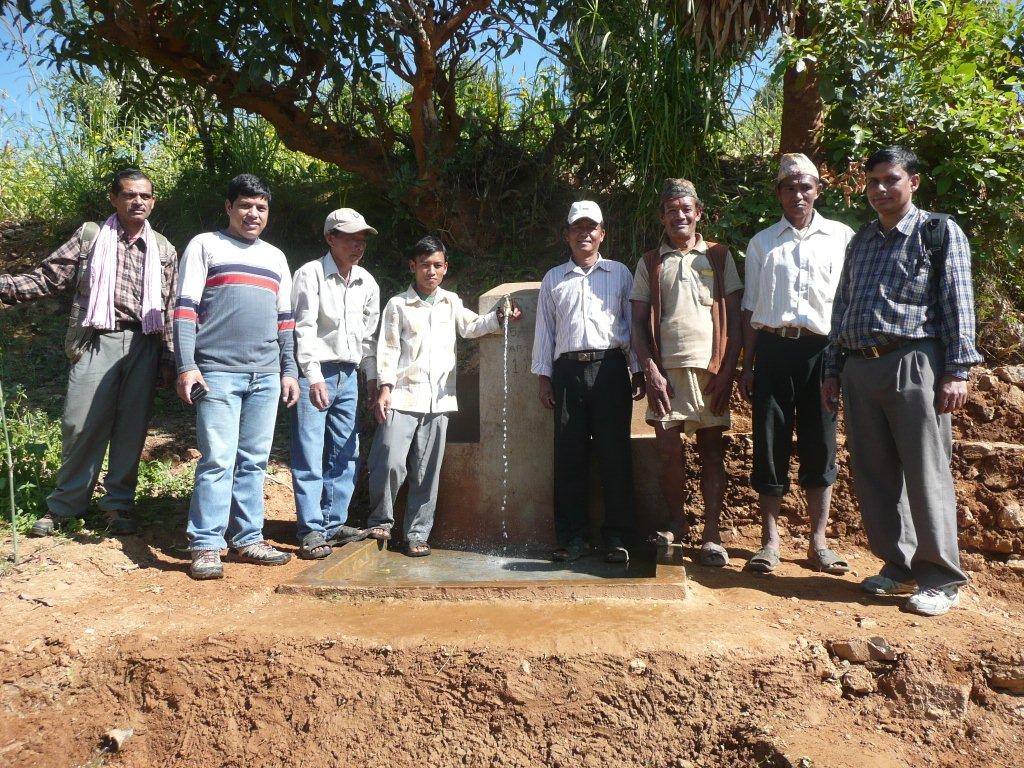 The Kamloops Global Awareness Network will be hosting an event called Empowering Communities in Nepal, as the third international guest speaker presentation of the Global Speaker Series, at 7 p.m. on Thursday, March 14, at Desert Gardens Community Centre.
The presentation will be delivered by Suresh Shrestha, executive director of Tamakoshi Sewa Samiti (TSS) and World Neighbours Canada partner NGO in Nepal.
For more information about the event, please see the article on Kamloops Global Awareness Network.
 Representatives of the Oliver-based World Neighbours Canada (WNC) organization are celebrating a recent announcement that a long-time friend and colleague, Elmer Lopez Rodriguez, has been appointed as Guatemala’s Minister of Agriculture.
On Jan. 14, Guatemala President Otto Perez Molina announced the appointment of Lopez Rodrigez, who had been serving as the Secretary for Rural Affairs.
World Neighbours Canada President Bruce Petch said Elmer was formerly the representative for World Neighbors (U.S). in Central America, and had been a key partner for World Neighbours Canada until he was appointed to the government.
“He is a brilliant and compassionate rural development practitioner and agronomist,” Petch said, adding Elmer worked closely with the group in setting up the La Esperanza program in Honduras.
The La Esperanza Development Program is a long-term program in Honduras, being implemented by Vecinos Honduras, World Neighbours Canada’s major partner in the region. The program’s objectives are to experiment, adapt and spread sustainable agriculture technologies; to strengthen local leadership and management capacity; to promote community and family health practices and to replicate the program in other communities.
Last year, in April of 2011, the Canadian International Development Association (CIDA) asked for call for proposals from Non Governmental Organizations (NGO’s) in Canada. This was the traditional way that CIDA decided where to put a sizeable percentage of its foreign aid funds for the past few decades. An NGO, like WNCanada, with a partner, like TSS in Nepal, would canvass people in their working area, find out what type of project would positively affect their quality of life, and then work out a plan to bring the project to fruition. The project plan would be presented to CIDA and if it satisfied the requirements for CIDA funding then CIDA would match our funding by as much as three to one.
Continue reading “What is development looking like in Canada these days?”
I read of the prison fire that killed 350 prisoners in Comayagua on the morning I flew out of Honduras last February. I wasn’t shocked; it fit into a pattern I had been seeing for the past three weeks of my tour of Central America. As a volunteer with World Neighbours Canada, I was pursuing my decades’ long interest in village development by visiting five long-term projects among the most marginalized people of Honduras and Guatemala.