by Judy Gray, World Neighbours Canada director, with thanks to Rébéka Tankoano for comments, video recordings and translation from local languages
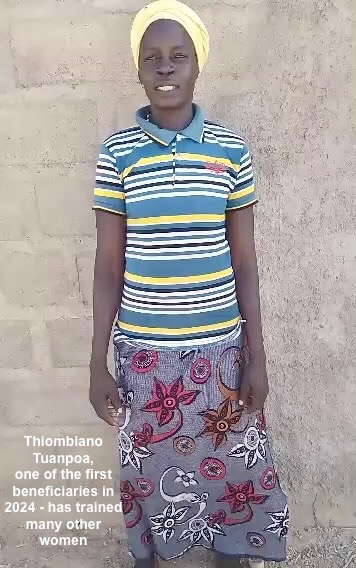
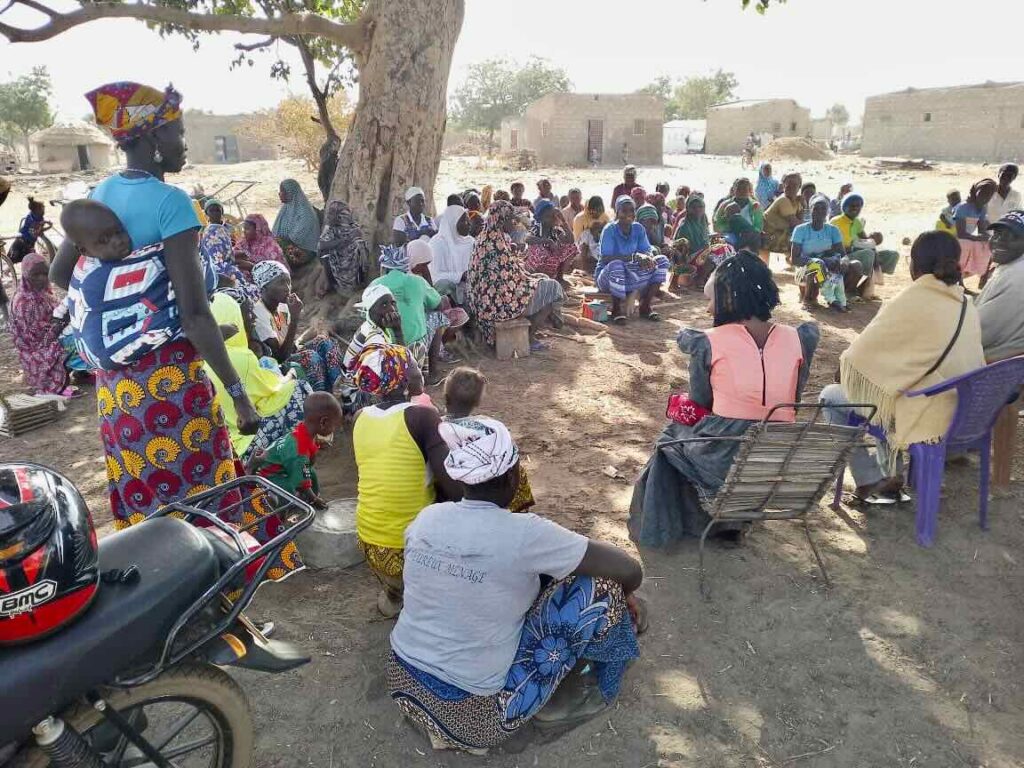
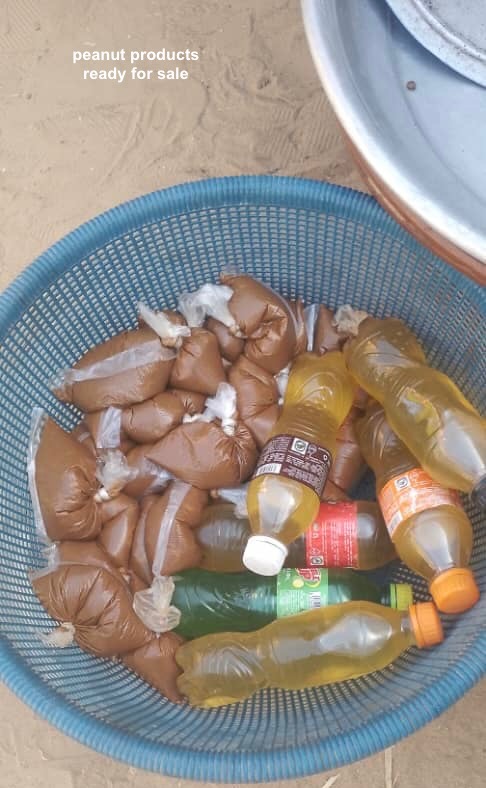
World Neighbours Canada supports income-generating programmes in eastern Burkina Faso for women who have been forced to move to the town of Fada because of terrorist activities in their rural communities. Our partner organization is APDC, and the coordinator is Rébéka Tankoano. Rébéka recently sent me several short videos showcasing some of the women who have received training and equipment in the past to begin an income generating enterprise. Many women have found that the processing and marketing of peanut products (peanut oil and biscuits) is providing them with income, so they are able to take care of basic family needs. One of the women, Thiombiano Touanpoa, has become instrumental in supporting not only her own family, but is reaching out to neighbours in her community and has trained some of them.
Here are Rébéka’s comments about Touanpoa: “Thiombiano Touanpoa is a former beneficiary of the peanut processing and marketing programme, trained in 2024. She trained 6 beneficiaries last year and some of this year’s beneficiaries, and she has also trained several women in her neighbourhood, including 10 women and 4 former beneficiaries of the APDC soap activity programme who have been retrained to work with peanuts. This woman is a leader!”
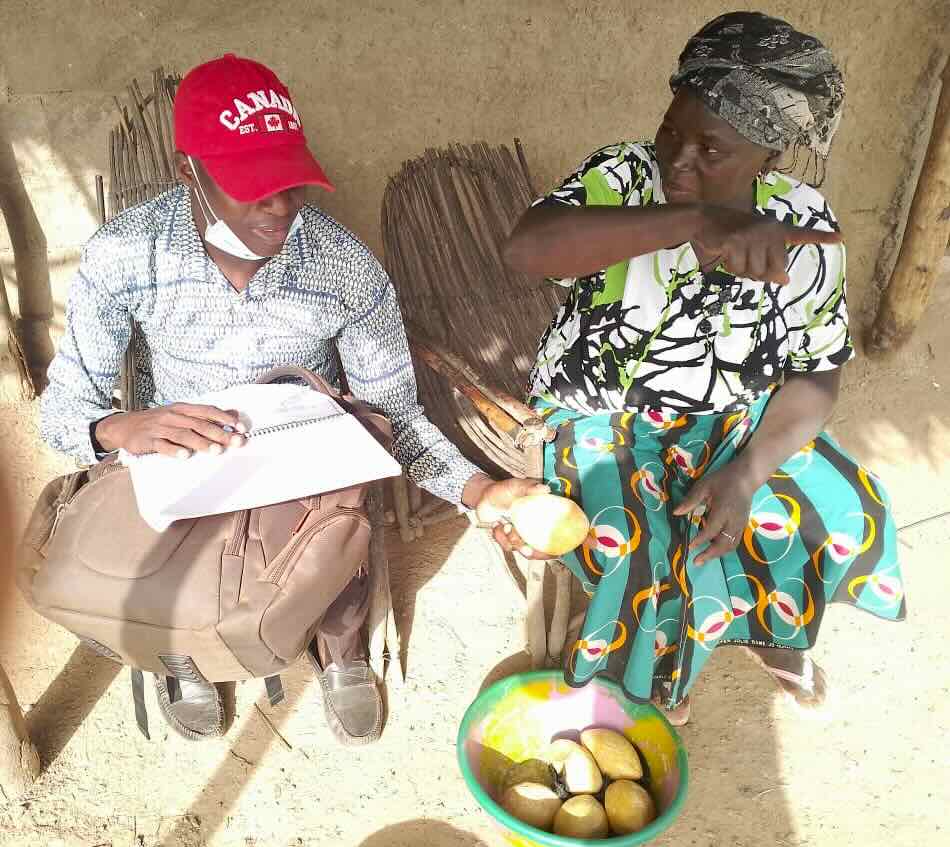
While visiting Touanpoa recently, Rébéka recorded two personal messages: one from Touanpoa and one from her husband.
“My name is Touanpoa. APDC trained and equipped me to process and market groundnuts. My business is still doing well and, thanks to the profits, I am able to pay for condiments, soap, my children’s school fees and healthcare for my family. This business really helps me. I thank APDC and its partners for their support. I am very proud of them. Other women have benefited from my training in peanut processing and marketing. Some of them are able to produce and market their products at home, but others, who lack equipment, often ask to use my equipment for production. I am very grateful to APDC and I ask if it can also help the fourteen women I have trained to obtain production equipment so that they too can produce and market their products, which will enable them to provide for their families as I do. This is my sincere request on behalf of the women I have trained. I am very grateful to APDC.”
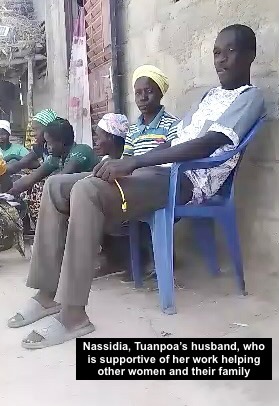
Touanpoa’s husband, Nassidia, added the following comments: “I am happy because APDC has helped my wife Touanpoa with an income-generating activity, which helps us to take care of our family. She has also trained other women in peanut processing and marketing so that they too can take care of their families, so I thank APDC for this support for my wife and for the fact that she has been able to teach this work to other women. I really thank APDC, thank you very much!”
The impact of an individual such as Tuanpoa cannot be underestimated! The following message from Pougniséli Gbangou, an internally displaced woman trained by Thiombiano Touampoa in peanut processing and marketing, demonstrates the success of World Neighbours Canada’s support for these villagers, and how APDC’s activities are creating a ripple effect that spreads positivity and hope within a very poor and marginalized group of people.
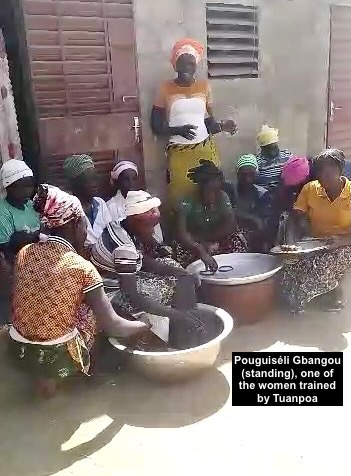
“My name is Pouguiséli Gbangou, and I am one of the women trained by Touanpoa in peanut processing and marketing. We have learnt the processing techniques very well and this helps us a lot in our families. But we have a problem because we do not have enough financial resources to buy our own equipment, so many of us ask Touanpoa to use her equipment to produce our peanut products. We are grateful to Touampoa for agreeing to offer us free training. She trained us all at no cost because she is truly very humble, very serious and very loving towards us, and all her qualities helped us to learn well with her. We sincerely thank Touanpoa for her great love for us, her comrades.”