Visiting Honduras – Community Art

This February, World Neighbours Canada (WNC) board members Gabriel Newman and Judy Gray along with WNC volunteer Peter Gray visited Honduras to see the work that was being done by our partners there, Vecinos Honduras. They will be sharing stories and information that they have gathered over the next few months.

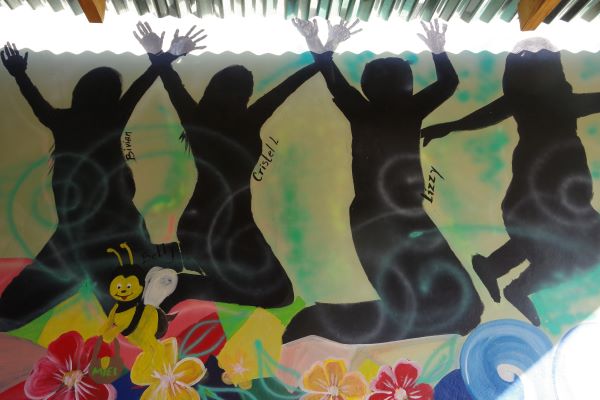
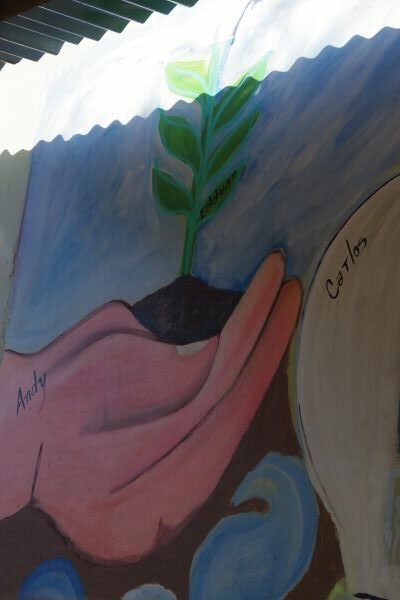
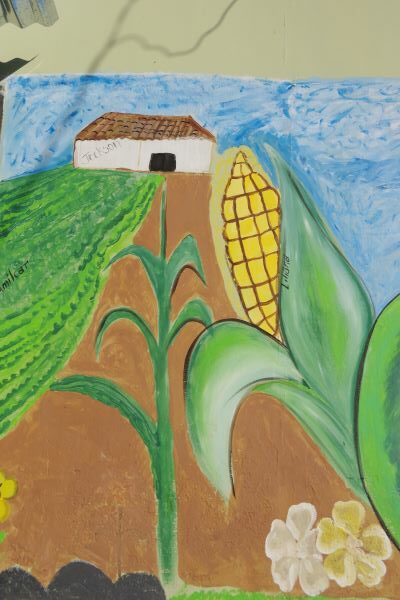
This first posting includes some of the artwork found within the villages, mostly at the Vecinos Honduras offices. Central to the imagery is the power of the connection between corn and life. The first three photographs are from a mural on the offices at Conception de Maria, Choluteca. Vecinos Honduras has been working here for the past eight years. We met with farmers, health volunteers, teachers, students, and community volunteers to hear what they have accomplished, and what their goals are for the future.

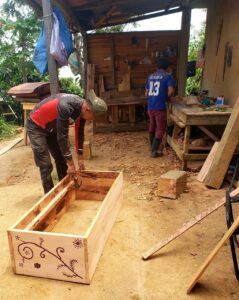
The last three photographs are from the walls of the offices at Conception de Maria, Langue. While Vecinos Honduras has worked in the Langue district for a while, we visited communities that are new to VH to find out what they hope for their future.

Supporting entrepreneurs and small credit groups in Honduras

By Gabriel Newman

Ever Perez’s wood working business

After ten years, Vecinos Honduras will be leaving the Azabache region of Honduras at the end of 2023. World Neighbours has supported Vecinos Honduras’s work building capacity, teaching agroecological techniques, implementing water systems, and for six years, thanks to support from Global Affairs Canada, implementing a maternal child health project. Now that the communities are better equipped to organize and direct their own future it is time for Vecinos Honduras to shift to new regions. Before they leave, however, there is one last program that World Neighbours Canada will support.

One of the consequences of the holistic approach Vecinos Honduras takes with community development is that communities drive many of the activities. One activity that was very popular had to do with entrepreneurship. Migration is a major issue in Honduras with many of the young people leaving the country to look for work. This is particularly detrimental to smaller communities. In Azabache, community members wanted opportunities for their children so they would stay in the community.

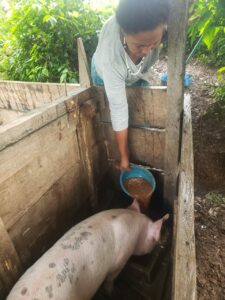
Irma Calderon’s pig farming business

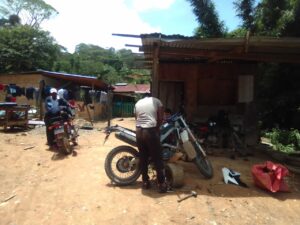
Many workshops were conducted, and a number of cooperatives, and private businesses were created. Micro credit lending groups were also created to support local entrepreneurs. Many of the businesses were related to agriculture such as honey or egg production and snacks, yet others were skills based such as woodworking, and auto repairs. Vecinos Honduras provided guidance for establishing these businesses. Groundswell International also provided financial support to start the lending groups.

Now that Vecinos Honduras is leaving the area, they want to ensure that these businesses understand their legal and administrative responsibilities. World Neighbours Canada is supporting training sessions for these small credit groups to become official, legal entities that will continue to operate long after Vecinos Honduras leaves.

Joel Gutierrez’s motorcycle repair business

Workshops are also being held for groups and individuals in business administration such as bookkeeping, billing, receipts, loan management, and taxes.  Vecinos Honduras wants to see these businesses succeed in order for these communities to retain their young people as well as to build resilience within the local community’s economy.

The following videos were created by Groundswell International and give a great glimpse into some of the participants and their businesses.

Income generation

https://www.youtube.com/watch?v=3wmW8z0lA8w

Youth Local Markets

https://www.youtube.com/watch?v=ryzaXZD1xT8

Political Change in Honduras and Burkina Faso

By Bruce Petch

There have been dramatic political changes in Honduras and Burkina Faso. Honduras has elected its first woman president, Xiomara Castro with the centre-left Libre Party. In Burkina Faso, the elected president was forced out by the military last weekend. World Neighbours Canada supports rural development programs in both countries – we are watching closely to see how these changes could affect the people we work with.

Honduras is facing multiple crises, with one of the highest murder rates in the world and huge numbers of people attempting to migrate to the United States. Gangs associated with drugs are pervasive. According to news reports, the outgoing president is expected to be indicted by US prosecutors on drug trafficking conspiracy charges. Supporters hope that President Castro will lead positive changes in the country, including less crime, less poverty, and more rights for women. However, the challenges she faces are immense. Before her government was even in place, several newly elected members of Congress defected from Castro’s party and elected their own congressional leader.

The people of Burkina Faso have faced increased attacks from terrorist groups believed to be associated with al-Qaeda and ISIS, a spillover from a conflict that started in Mali more than ten years ago. Recently there have been public protests, expressing dissatisfaction with the government’s inability to restore security in the country. Then on 24 January 2022, the military forced the president to resign, citing the same concerns as expressed by protesters.

The local organizations that partner with World Neighbours Canada in Honduras and Burkina Faso are still functioning normally, and they are experienced in managing through crises, whether political turmoil or natural disasters. We are hoping that the changes in government in both countries will lead to better governance eventually, but at present there is much uncertainty.

To read more about President Castro:

https://www.theguardian.com/global-development/2022/jan/26/honduras-first-female-president-xiomara-castro-women

To read more about the coup in Burkina Faso:

https://www.aljazeera.com/news/2022/1/27/burkina-faso-military-coup-prompts-fears-of-further-instability

Meet Juan Armando Mendez

In 2020 a “call for stories” was sent out to each partner organization with hopes that people would find the time to participate. This story project was initiated to switch the narrative from having the World Neighbours Canada volunteers tell the stories of those participating in or initiating programs, to having them tell their own stories with as much or as little detail. This is one of those stories. To read more visit Stories.

Juan Armando Méndez, Honduras

 My name is Juan Armando Méndez, I am a bricklayer and agroecological producer, partner of the Caja de Ahorro y Crédito Rural “Nueva Generación”. I am married to Mrs. Lucila Idiáquez with an 11-year-old daughter. I live in the community of La Libertad, Azabache Danlí El Paraíso, Honduras.

Before Vecinos Honduras came to my community, I thought I “knew everything”, without having any idea of ​​”learning new things” this has motivated me more to continue learning; As a way of understanding more about the work of Vecinos Honduras, I always wondered what does it mean to Return to Earth (VH slogan)? Answering me today, “I realize that it is better to be on Earth producing, than to be with a different mind in other directions”. This new knowledge is part of the changes of a person, family and community.

I feel that my life has changed, I learned to respect nature and people, “I see them as my own person, love each other and share with others, the health of my family has changed” is also a process of unlearning some agricultural practices that were negatively affecting me emotionally and were polluting nature.
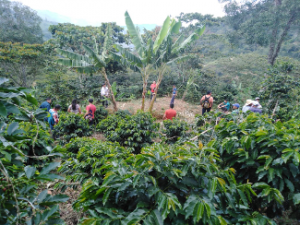
Together with my family I have a 1.4-hectare plot, diversified with local crops, its main crop is coffee. “I learned to see the plants with affection, applying organic products, taking care of the land,” and now I say, “that if there are no trees, there are no water and without water there is no life”. This philosophy is possible using organic products and stopping using chemical products. This change is not easy but not impossible, and “I have achieved it with the support of my family and Honduran neighbors”. It is already three years from beginning applying only organic products on my plot. At the beginning I lowered the agriculture production, however in this short time I increased by 1% the production from applying organic products, and I have also saved approximately $820.00 in purchase of chemical fertilizers. I feel happy with these changes for the health and economy of my family and community; “using chemicals now offends me.”

After experiencing the amino acid products (liquid) and the Bocachi fertilizer (solid) in my plot, I now share my experience, knowledge and organic product with other producers, so that they can experiment and will be convinced of the effectiveness of the product. Currently I have generated $1,200.00 from the sale of these products; next year I will invest them in expanding my growing area with 0.70 more hectares than I already have.

In addition, I am a member of a “New Generation” Rural Savings and Credit Fund. I feel motivated to be organized in my community, as “if we are not organizing it does nothing”. Being a part of this organization has given a space to market coffee production at a fair price. In the last harvest, I sold 272.15 kg of dry parchment coffee through the Rural Box, obtaining an additional profit of $168.00. “I feel happy because now I am selling the coffee well,” as before I joined this organization, I sold my product badly. Now, for every Kg I am generating an additional $1.61 because the quality of my product has improved and I am marketing through the organization, “I feel very motivated to be part of the organization.”

Together with my family we have a dream of having our coffee maca with the name “I am what I am, pure Azabache coffee”. We are already working to make it come true, it will be an option to improve and take advantage of our production, generating opportunities for families in my community.

Grateful to Vecinos Honduras and their cooperators for the support they have given us as a community, which has been used by most of the families in our community.

Hurricane Eta creates extensive damage to Honduras

Honduras has been hit hard by Hurricane Eta. So far approximately 1,700,000 people have been affected by the wide spread flooding in the north and damage throughout the country.
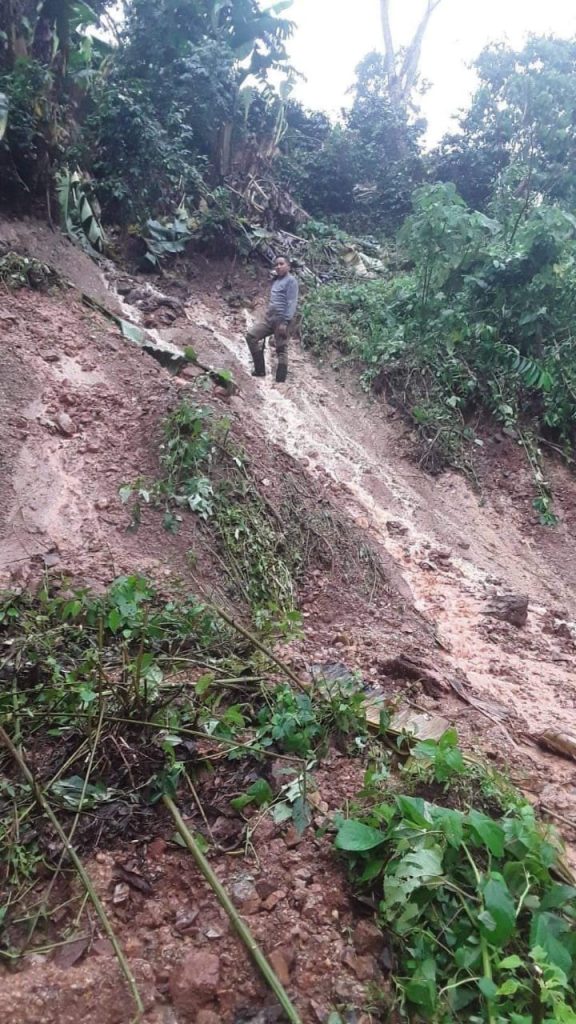
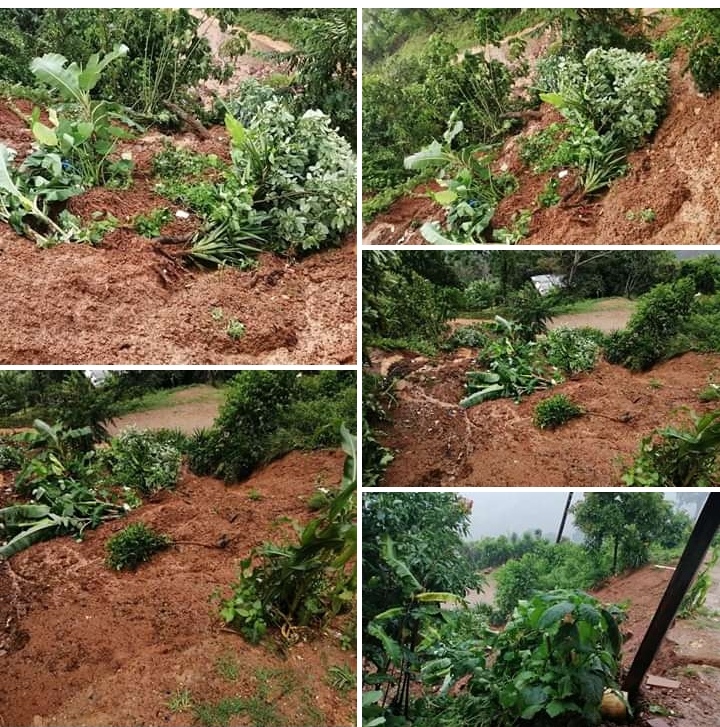
There has been damage in a few of the communities Vecinos Honduras works in but not the extensive flooding we are seeing in the news. Two communities in Azabache and seven in Santa Barbara were affected by mudslides, and washed out roads and crops.
 
Executive Director Edwin Escoto, is philosophic about the further set back to Honduras, “seems to me nature is demanding its place,” as climate change continues to make life harder for those less fortunate. “La Venganza de la Tierra,” he says.
 
This is very troubling as Honduras has still not recovered from Hurricane Mitch twenty two years ago. Mass emigration, corruption, droughts and poverty have continued to contribute to Honduras’s misfortune.
We are waiting to find out what the total damage is but that may take many years to establish.

Boring yet important

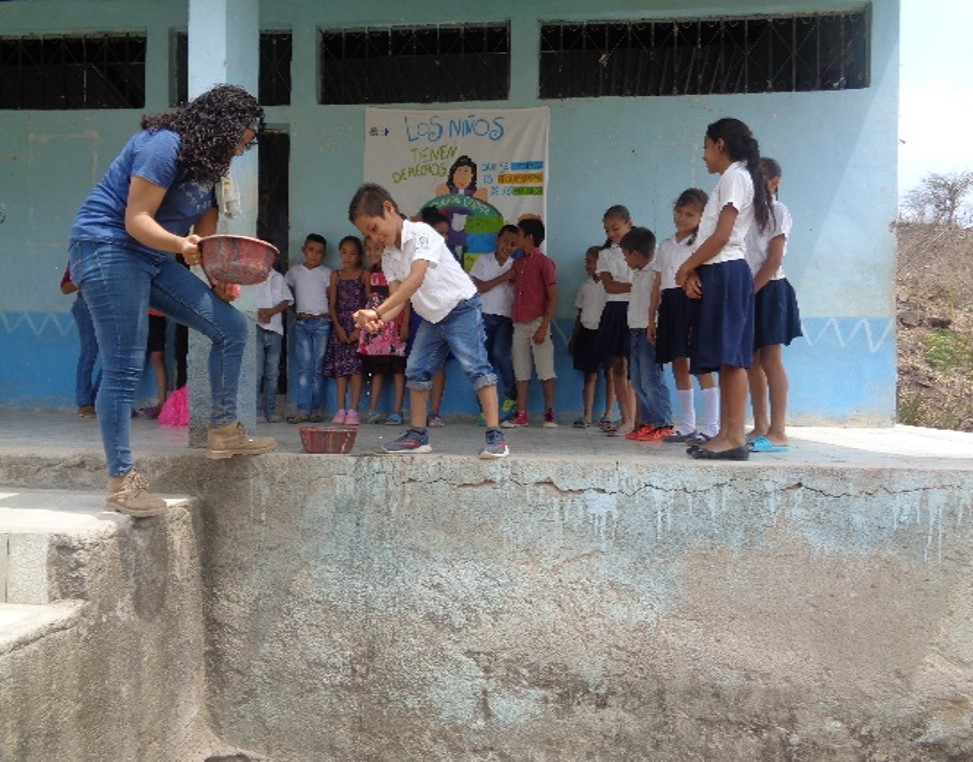
Children learning how to properly wash hands.

By Gabriel Newman, Board Member of World Neighbours Canada

I want to tell a short story about a conversation that occurred just before the Covid pandemic took over the Americas.

Back in March, Edwin Escoto, the Executive Director for our partner organization Vecinos Honduras, was in BC giving talks about life in Honduras. While I was with him, I got to watch him talk to about two hundred high school students. He talked about corruption, poverty and hunger in Honduras; he spoke about the human rights that are not afforded to many; and he talked about VH’s approach to helping communities build capacity and to advocate for their own rights. It is a lot to absorb in an hour-long talk and I could tell that many students felt overwhelmed, but they also felt compassion. The most common response I heard from students and teachers was, “what can we do?”

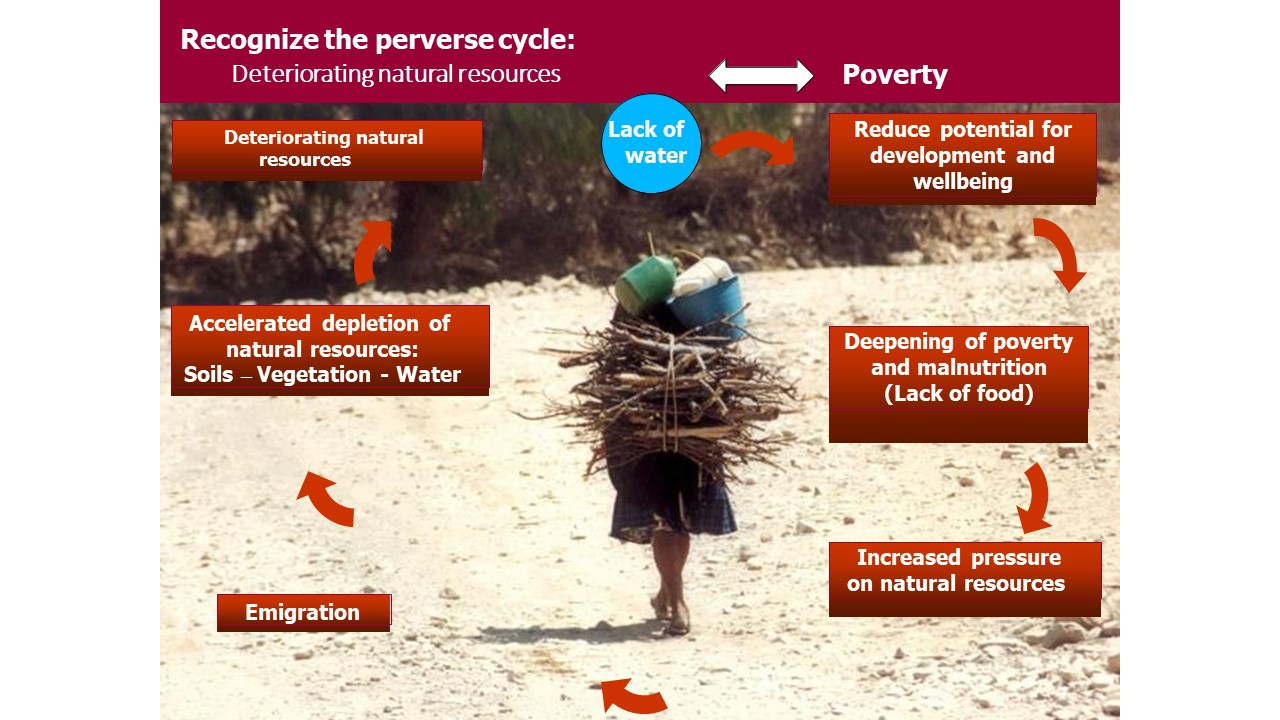
The cycle of poverty in Honduras.

Honestly, I didn’t have a great answer for that. The trip was not for fundraising purposes but education. I wasn’t going to try to sign them up as monthly donors and World Neighbours doesn’t “do” anything in a concrete sense other that raise funds and leverage those funds for grants so that people in the communities can gain the skills to “do the work.”

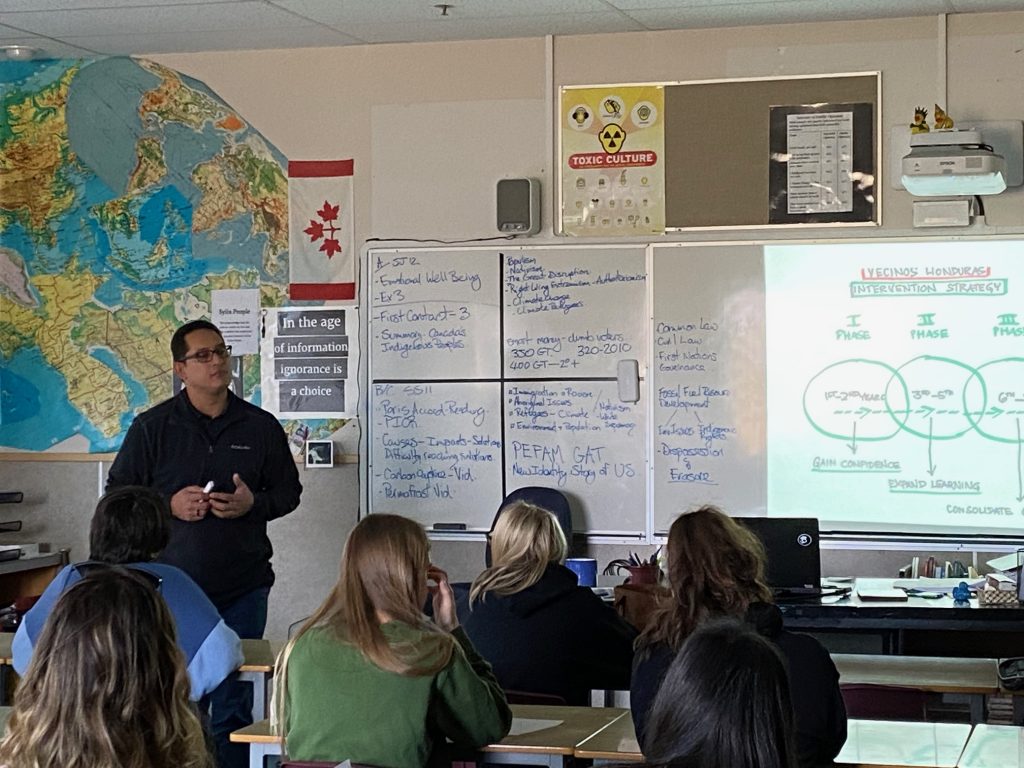
Edwin discussing their process and Social Justice to a grade 12 Social Justice class.

One teacher said that they do an annual fundraiser and was curious that if they raised $500 for VH, what it could go towards. Edwin quickly mentioned hygiene for students. As part of the slate of programs and training VH conducts in communities, proper hygiene training for children in schools (hand washing) would have a huge impact on the health of students. I could tell it wasn’t the sexiest of answers. It wasn’t concrete and it felt somewhat basic. I figured I would have to think of something more interesting and important. Then came Covid.

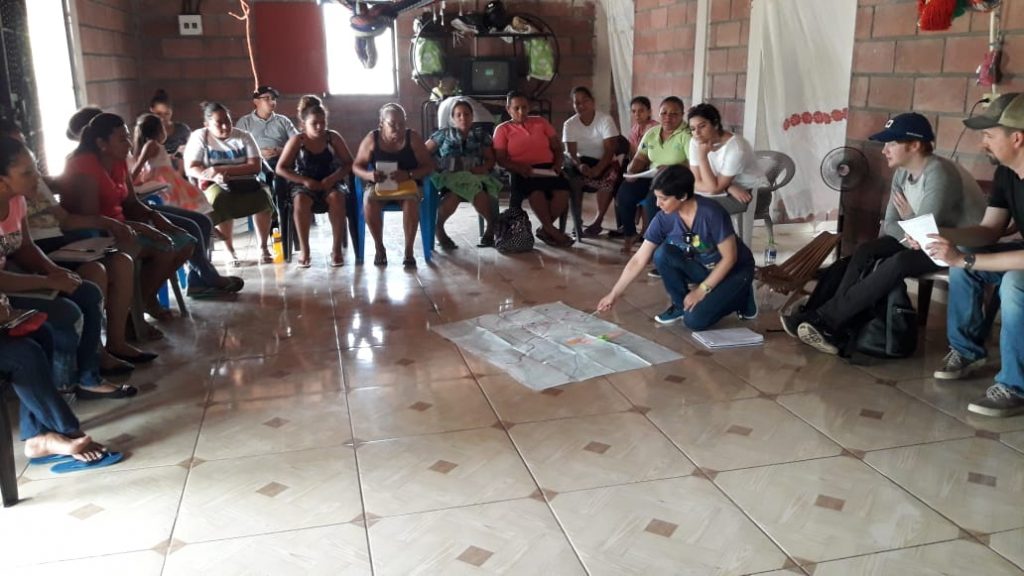
Community Health Boards made up of local volunteers plan and organize health related initiatives.

While the communities that VH works in lack food security, water and easy access to hospitals, they do understand hygiene and community health through VH’s training. That gives them a huge advantage in battling Covid. These communities already have a collection of volunteers to organize and spread information and conduct health training. And most importantly the children and adults understand the importance of hand washing, the main defence against contracting the virus! This does not make these communities immune from Covid, but it will help slow the spread should the virus reach these isolated people. And it will arrive soon if it hasn’t already. People are leaving the heavily affected cities to go to their family homes in the villages and bringing Covid with them. What I dismissed as uninteresting became the cornerstone for helping these communities protect themselves.

The first step to protect the future of Honduras means ensuring the children are healthy.

So, the next time I am asked where funding could be allocated, I will definitely say, “hygiene in schools.” It is inexpensive and basic, yet this pandemic has demonstrated it is also life saving.

Thank you Edwin!

Edwin discussing their process and Social Justice to a grade 12 Social Justice class.

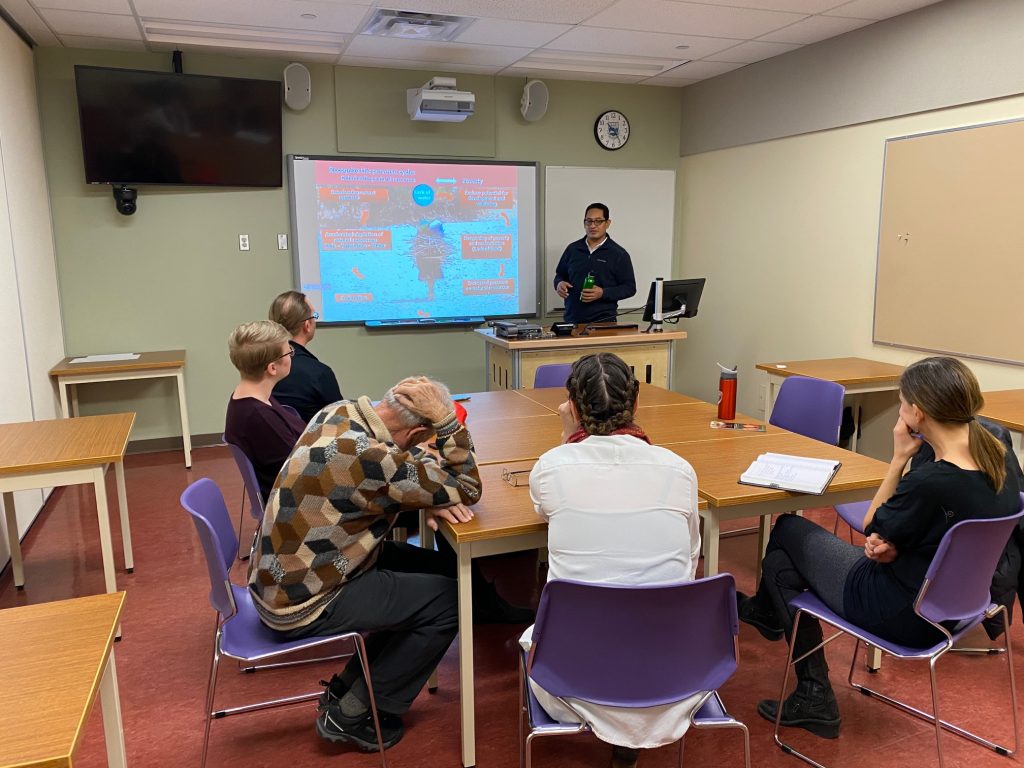
For nearly two weeks Vecinos Honduras’s Executive Director, Edwin Escoto, toured British Columbia speaking to groups large and small about Honduras and the work Vecinos Honduras is doing. It was an inspiring week! Edwin is a dynamic speaker, and despite doing every one of his twenty presentations in his second language, he was clear, passionate and inspiring.

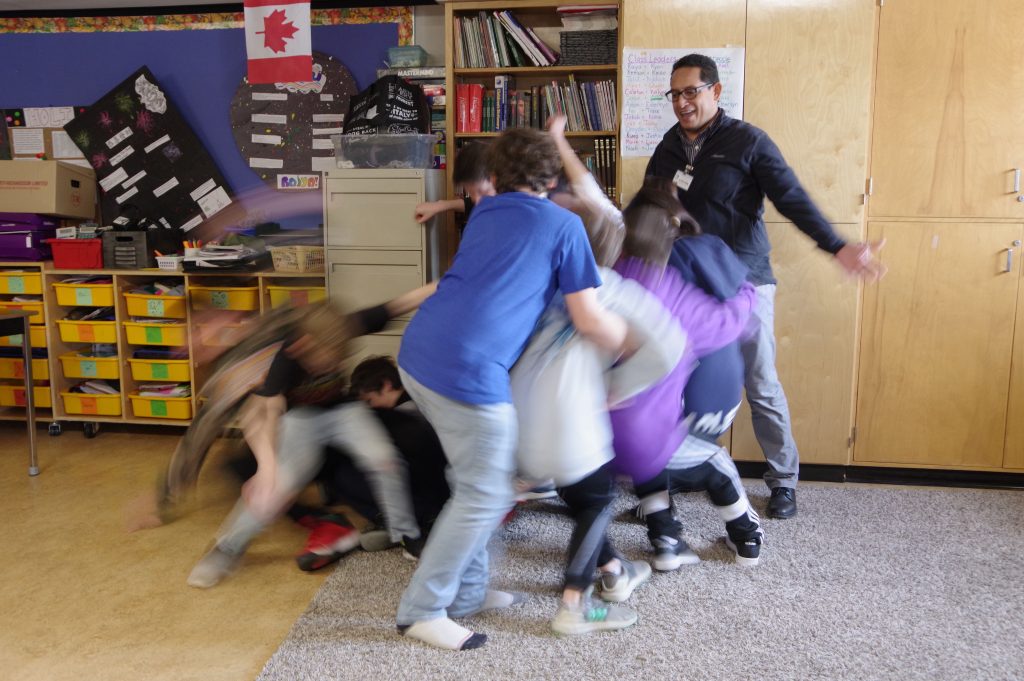
Edwin often used audience participation to demonstrate community building.

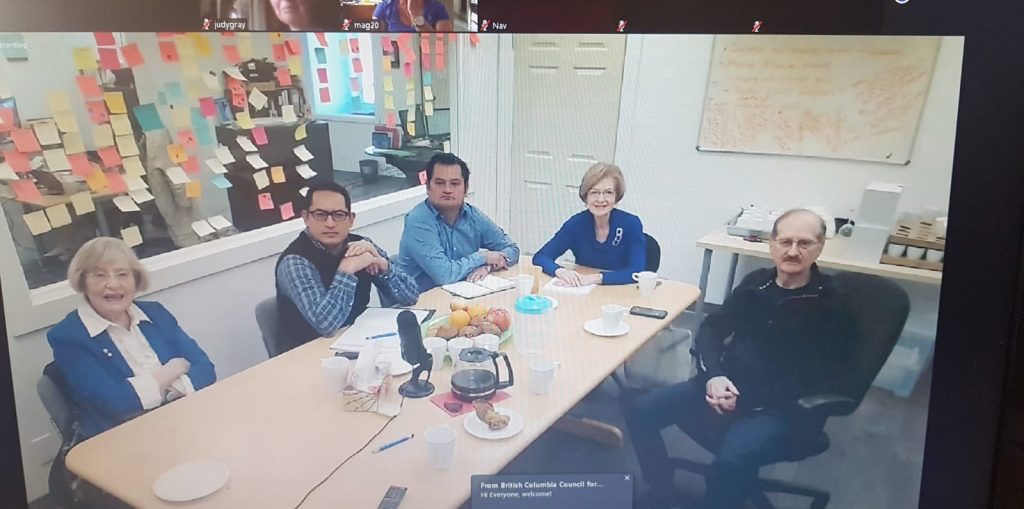
During Edwin’s stay in Canada, he did presentations in Vancouver, Kamloops, Vernon, Kelowna, Cranbrook, and Oliver. He presented to over 500 Canadians; including talks to elementary, secondary and university students as well as several presentations to the public, and with post secondary institutions. He was also able to conduct a webinar with the BC Council for International Cooperation (BCCIC) which is available for anyone to watch online at (https://drive.google.com/drive/folders/1W4nZwz9zgMZV_IG1JghZhMbfNCcZvfQ-?usp=sharing.

You can watch the BCCIC webinar here.

Edwin was deeply honoured to be invited to come to Canada and share the activities of his organization and the situation in his country. Response from participants was very positive. To be able to put a face and details to a complex situation opened the eyes of many Canadians to international development and Canada’s role in assisting these countries.

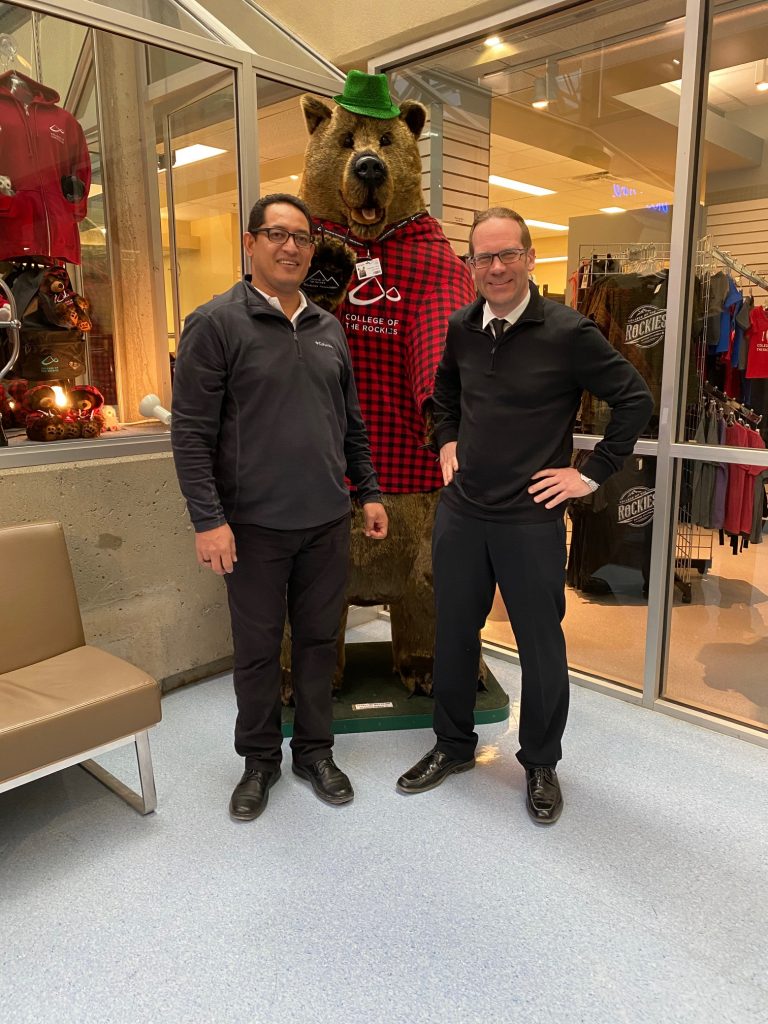
Meeting with the International Projects team at the College of the Rockies.

We, at World Neighbours, want to thank everyone who welcomed Edwin, attended talks, invited him into their classrooms, their homes, and made him feel so welcome on his first visit to Canada. A special thank you to BCCIC, Global Empowerment Coalition of the Okanagan (GECCO) and the Okanagan Regional Library for cosponsoring talks.

At the end of his trip there was some concern about his ability to return to Honduras as countries were closing their borders due to Covid-19 concerns. Luckily, he was able to change flights and returned to Honduras a few hours before Honduras shut its borders. He is now self isolating at home.

Edwin Escoto with Kerry Brinkert, Manager of International Projects at the College of the Rockies

Thank you Edwin!

Edwin Escotos’s recent visit to British Columbia was made possible through World Neighbours Canada Society grant from Global Affairs Canada under the Maternal Newborn Child Health initiative.

Only 4 opportunities to hear Edwin

There will only be four public opportunities to hear from Vecinos Honduras Executive Director, Edwin Escoto, when he visits BC this week. He will be speaking to community groups, schools and universities but there will only be four public opportunities.
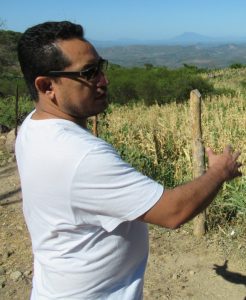
Luckily, the first opportunity will be online and so you can either join in person in Vancouver or log on for a “lunch and learn.”

This is a great opportunity to learn about our partner, their work, and Honduras in general.

March 4 12:00-1:00 In Vancouver and online

More details at https://www.bccic.ca/event/bccic-groundtruthes-sustainable-development-from-a-southern-perspective-honduras/

March 7th,  3:00-4:00pm in Vernon, BC at the Vernon Library

More details at: https://www.facebook.com/events/613214629459257/

March 8th, 3:00-4:00pm in Kelowna, BC at the Kelowna Main Branch Library

More details at: https://www.facebook.com/events/245404449812777/

March 12th, 7:00-8:30pm in Oliver, BC at Christ the King Catholic Church

We hope to see you there.

A Visitor from Honduras!

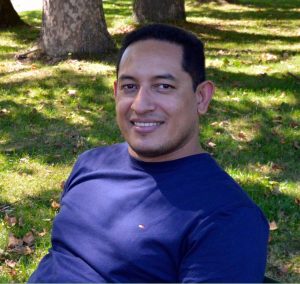
Edwin Escoto

World Neighbours is excited to announce that Edwin Escoto, the Director of Vecinos Honduras, will be coming to British Columbia to do a public speaking tour. From March 2-14 he will travel to Vancouver, Kamloops, Vernon, Cranbrook, Oliver and Penticton to meet with school children, universities, service groups and community organizations.

If you want to host a speaking event in your area, please let us know as he is booking up quickly.

We will be posting a detailed list of events shortly.

Edwin Escoto, is the Director of Vecinos Honduras. Since 2009 Edwin has helped build Vecinos Honduras into a leading NGO promoting rural development and agroecology. Edwin has also been appointed to be the new Regional Coordinator for Latin America and the Caribbean for Groundswell International, a non-profit organization with a mission of strengthening rural communities to build healthy farming and food systems from the ground up.

Vecinos Honduras uses a very effective and proven approach to empower local people to manage their own affairs. The organization typically stays in an area for 6 to 8 years. Initially they generate interest by training people in specific techniques for growing more crops, raising healthier children, and so on. They also begin to train local leaders to: organize activities among themselves; include women in decision-making; run effective local organizations such as health committees; and manage finances. Gradually Vecinos Honduras staff phase themselves out and local leaders take over. After 6 to 8 years, the goal is that people will have the knowledge and skills to initiate village development projects on their own, and seek technical support and funding from government, national or international organizations as needed.

World Neighbours Canada and the Sustainable Development Goals of the United Nations

By Bruce Petch,

World Neighbours Canada takes a practical approach – we want to help people achieve tangible improvements in their lives. Nonetheless it is useful to keep track of trends in international development from a wider perspective. Over the last few years, there has been a lot of attention paid to the “Sustainable Development Goals”. These goals were adopted by all United Nations member states in 2015. There are 17 goals. Goal 1 is no poverty, Goal 2 is zero hunger, Goal 10 is reduced inequality and Goal 13 is climate action, to name a few. They are intended to apply to all countries, not just developing countries. And a key part of the concept is that all the goals are interconnected. The goals (often referred to as the “SDGs”) seem to be mentioned in just about every meeting and document that touches on international development. The high profile of the sustainable development goals has helped to draw attention to the struggles faced by people around the world who are trying to grow enough food for their needs, find enough water, and survive drought and other natural disasters.

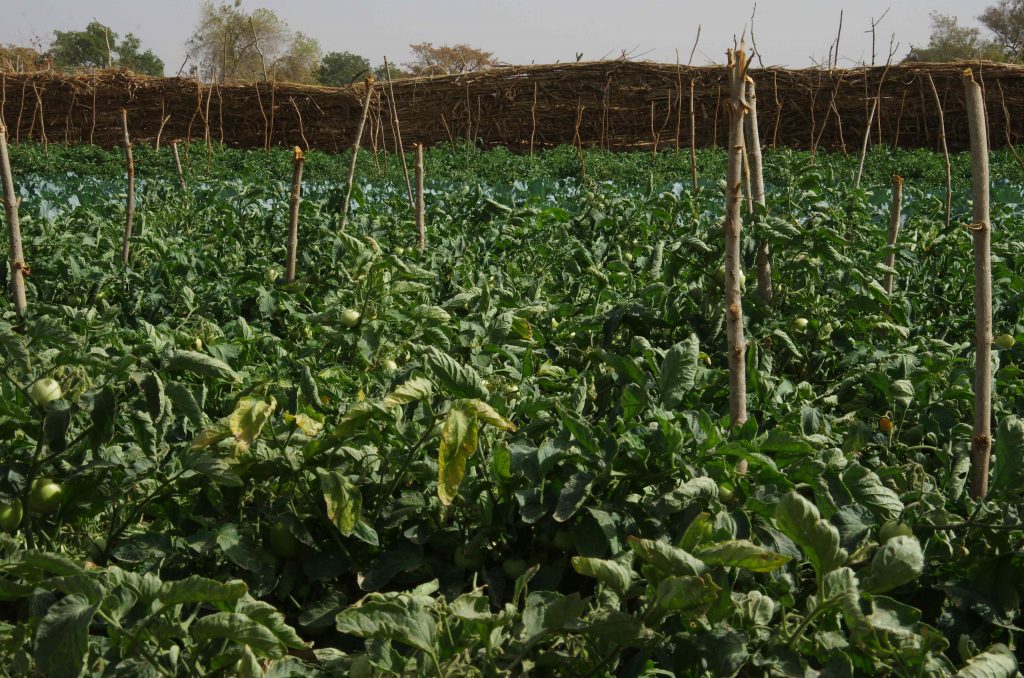
Community gardens help improve the health of the community and provide additional funds.

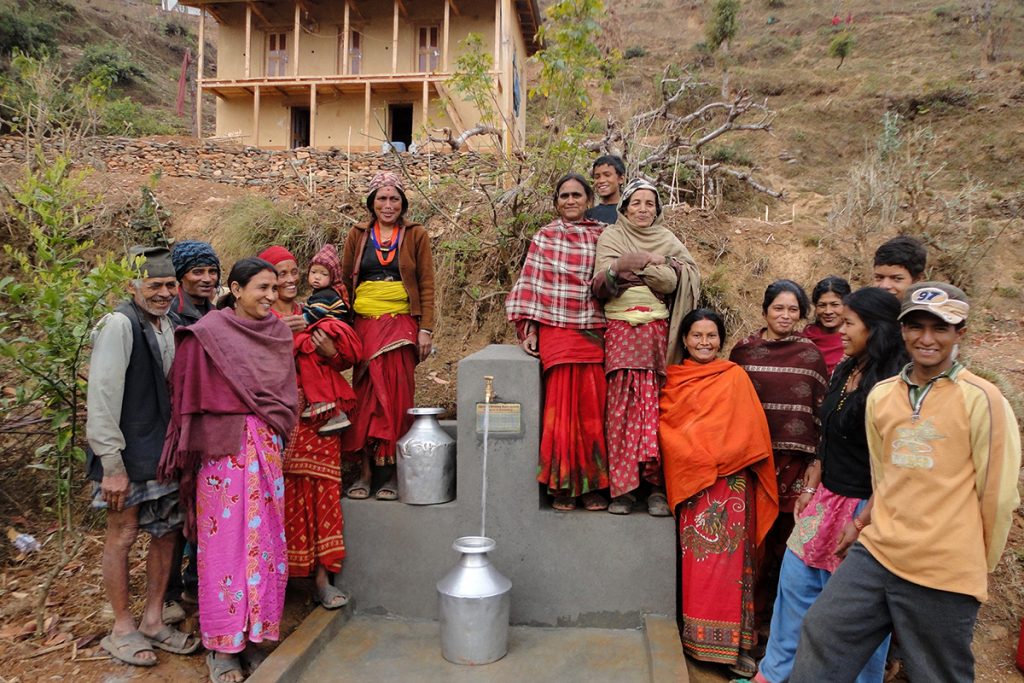
World Neighbours Canada supports the goals, especially the ones central to our mission like no poverty, zero hunger, gender equality and climate action. But we look at the goals from a “results on the ground” perspective. If our programs can be stronger by taking a more integrated approach – for example, the gender equality implications of increasing food crop production – we embrace the concept of the “SDGs.” Our partner organizations have a deep understanding of the connections between the different goals. For example, in Nepal our partner organization has been focusing on goal 6 – clean water and sanitation – but the outcomes they are aiming for are goals 3 (good health and well-being) and 6 (gender equality; women and girls do most of the water-carrying). In Burkina Faso, food security and child malnutrition are critical issues. Our partner organization works in an integrated way towards zero hunger, good health and well-being, gender equality and no poverty. In Honduras, our partner is embarking on a new initiative to provide entrepreneurial training and support for young people in rural areas, touching on goal 8 (decent work and economic growth) and goal 4 (quality education). In every country, we have a long history of ecological approaches to agriculture, which fits with the environmental goal called life on land (number 15).

The Sustainable Development Goals provide a useful framework for a coordinated approach to the alleviation of poverty and better management of finite resources. World Neighbours Canada is inspired by these goals to support our partners in ensuring that people’s lives are impacted in meaningful ways, rather than focusing narrowly on specific outcomes.

World Neighbours Canada • Box 1771, Oliver, B.C., Canada • V0H 1T0
250-498-1713 • info@worldneighbours.ca
Federally registered charity BN 89212 8646 RR 0001